Innovative Pedagogical Laboratory for Training with Virtual Reality Technologies - IPLab_VRt
The Innovative Pedagogical Laboratory for Training with Virtual Reality (IPLab_VRt) was established as a space (both physical and virtual) for conducting scientific research and training for educators in the field of teaching and learning using virtual reality technologies.
About the Laboratory
The Innovative Pedagogical Laboratory for Training with Virtual Reality (IPLab_VRt), Room 4243, was inaugurated on September 15, 2025. It is the result of work under the research project “Innovative Pedagogical Laboratory for Applied Research and VR Technologies for Teaching in the Field of Inclusive Teaching and Learning in Higher Education,” carried out by a team of linguists from the Department of Foreign Languages and Applied Linguistics (DFLAL) and researchers from the Faculty of Applied Mathematics and Informatics (FAMI), the Faculty of Telecommunications (FTC), and the Faculty of Computer Systems and Technologies (FCST).
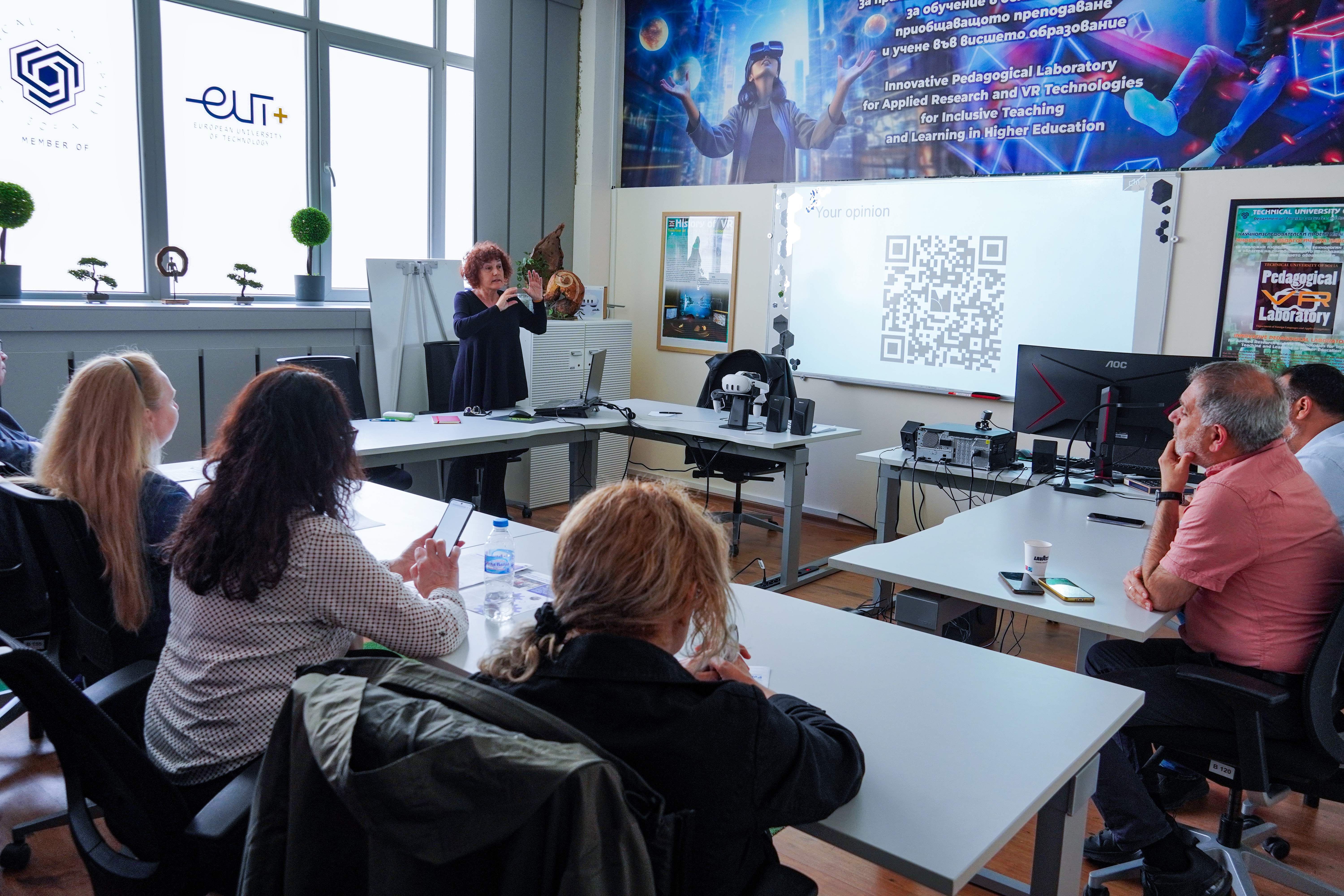
The interior was created based on an original design, combining a high-tech and “green” aesthetics with a separate area for work meetings and relaxation, two workstations, 8 seats for students, and 5 for attendees.
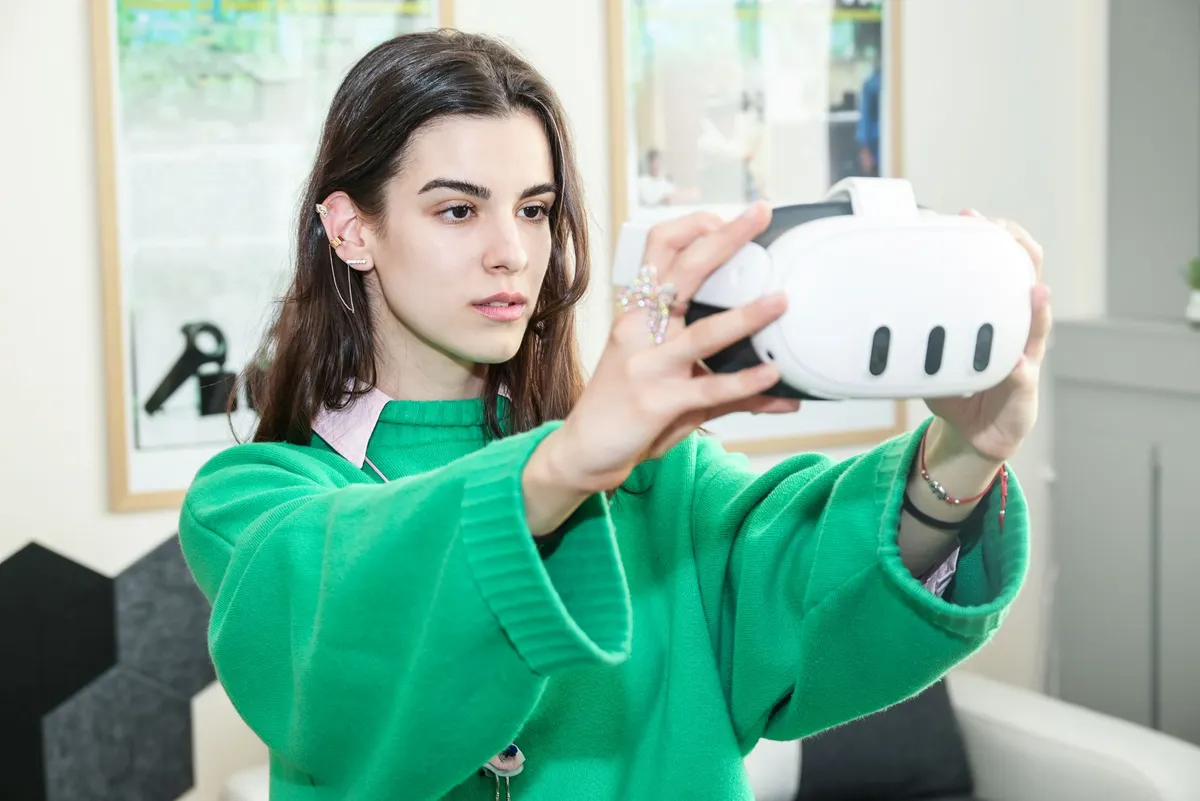
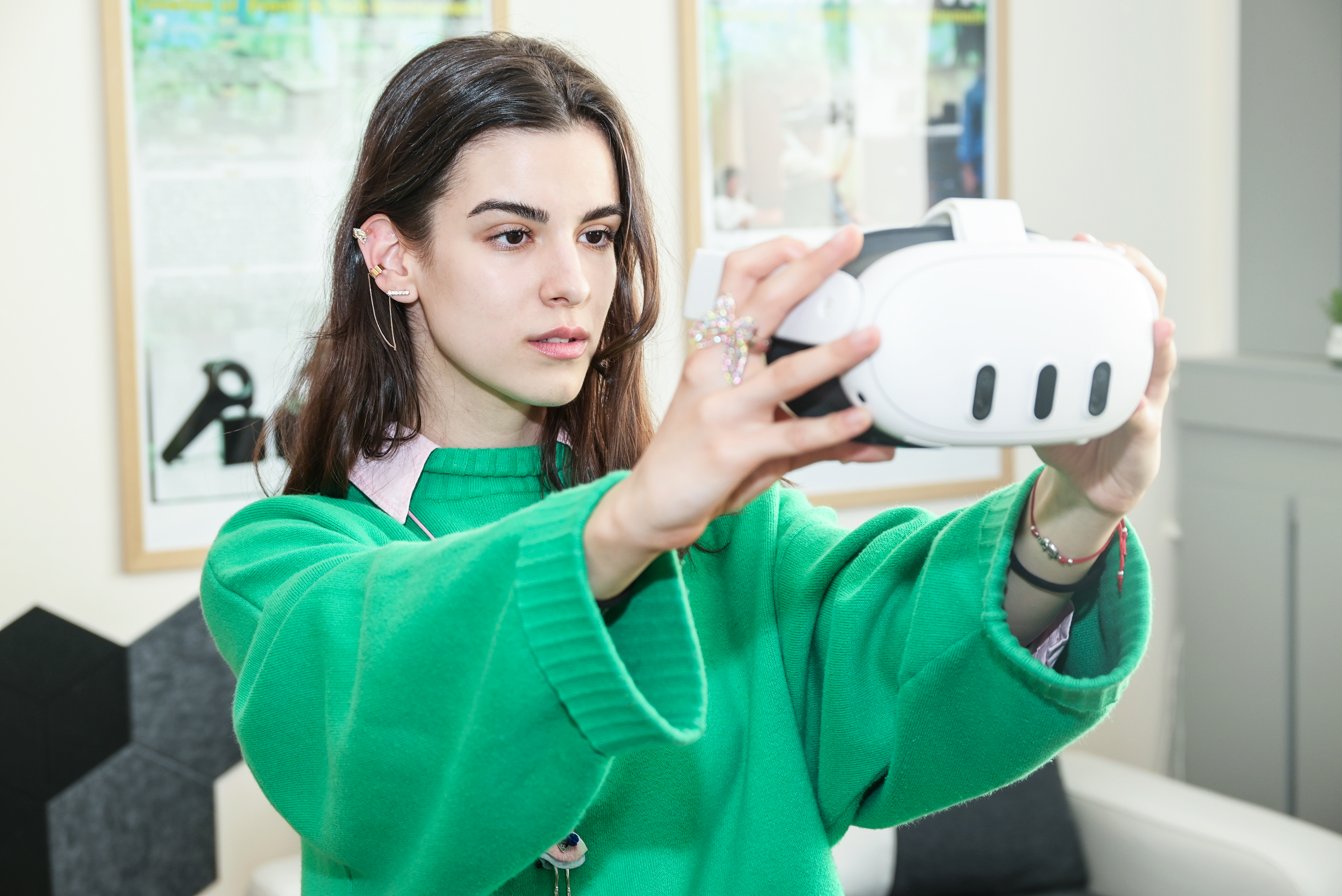
The lab is equipped with a computer setup and a high-performance laptop, four sets of Meta Quest 3 virtual reality headsets, a multimedia projector, a whiteboard, and a flip chart.
The laboratory was established as a space (both physical and virtual) for conducting scientific research and training for educators in the field of teaching and learning using virtual reality technologies, both in Higher education as well as in school education, with the aim of improving the quality of educational services through the use of innovative methods and the implementation of technological innovations in the classroom.
At IPLab_VRt, in addition to classes featuring presentations by students majoring in the Pedagogy of Mathematics, Physics, and Computer Science, interactive sessions for international students studying at the Technical University of Sofia under the “Erasmus+” program, various seminars, panel discussions at scientific forums, roundtables and debates, as well as workshops and training sessions led by the team from the European Research Group ERG EL@RA, which is part of the European University of Technology (EUt+) project, are held.