NIL "Electrophysical Technologies for Thermal Treatment of Metals - EFTTOM"
The Scientific Research Laboratory "EFTTOM" was established in 1973 as a laboratory with departmental status – it is a subdivision of the Department of Materials Science and Materials Technology at the Faculty of Mechanical Engineering and Technology of the Technical University in Sofia and is engaged in comprehensive educational and scientific research activities.
About the Laboratory
The Scientific Research Laboratory "EFTTOM" was established in 1973 as a laboratory with departmental status – it is a subdivision of the Department of Materials Science and Materials Technology at the Faculty of Mechanical Engineering and Technology of the Technical University in Sofia and engages in comprehensive educational and scientific research activities, namely:
- Exercises are conducted at the SRL "EFTTOM" for students from the FMT in the courses "Thermal Treatment of Metals", "Chemical-Thermal Treatment" and "Special Methods for Thermal and Chemical-Thermal Treatment";
- The SRL "EFTTOM" provides conditions for educational-research activities for students and for the development of graduation theses (more than 80 have been successfully developed so far), as well as for the training of doctoral students and the development of doctoral dissertations (a total of 10 have been defended so far, including 2 for Dr.Sc.Tech.);
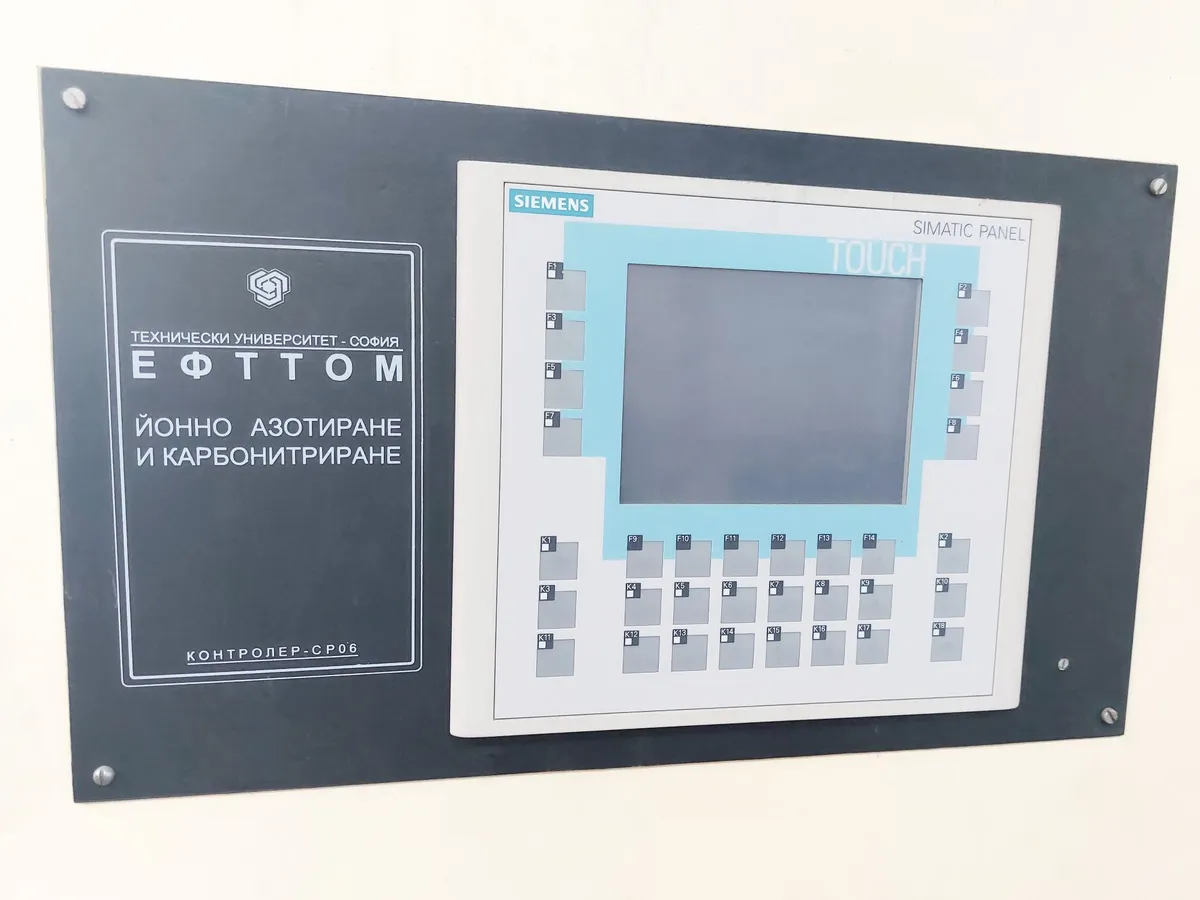
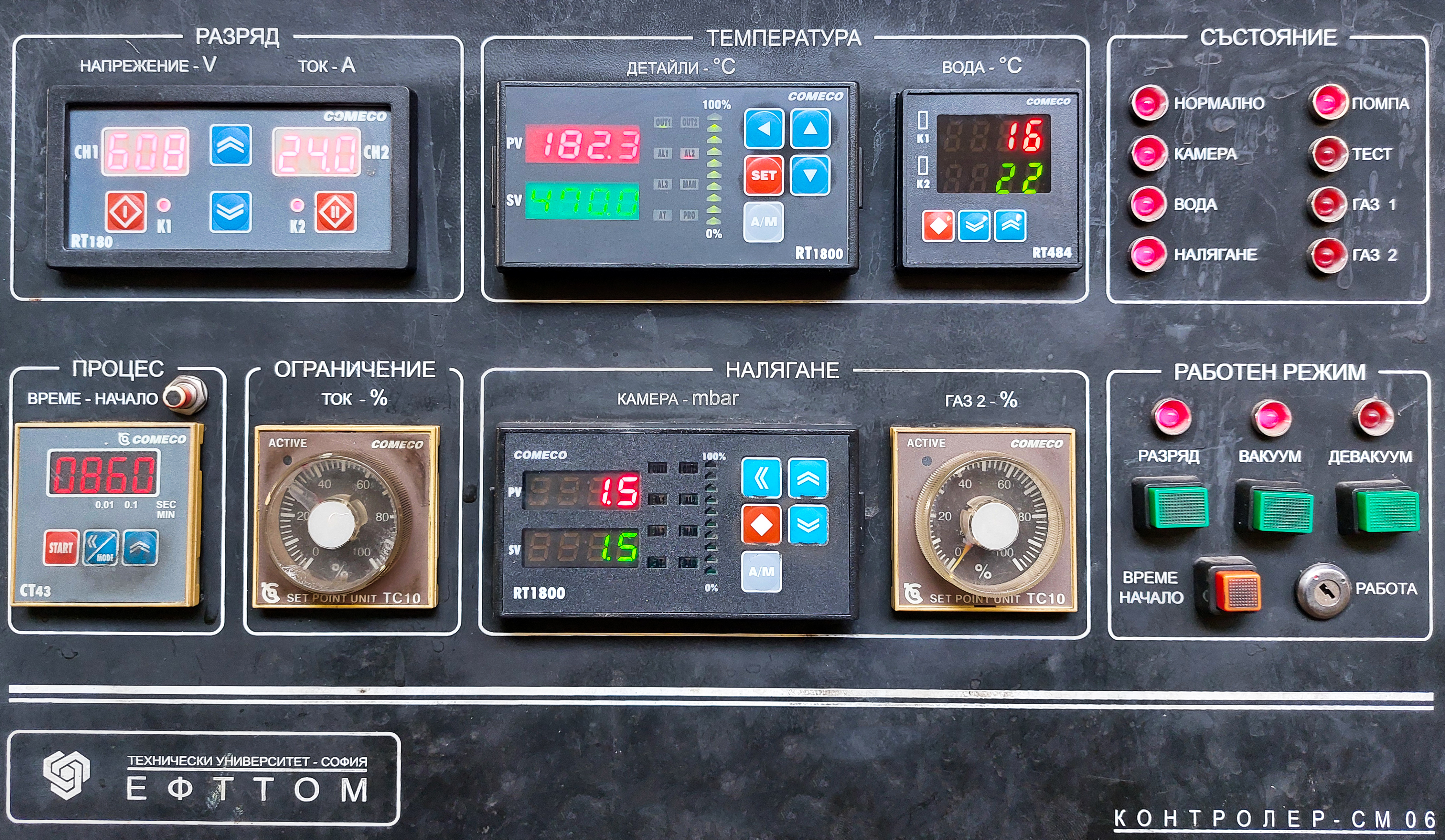
- The SRL "EFTTOM" performs various tasks under the SRP in the field of ion nitriding and carbonitriding of steels and alloys, including with foreign partners. The SRL "EFTTOM" conducts scientific research in the field of chemical-thermal treatment in low-temperature plasma, develops technologies for ion nitriding (ion carbonitriding) and produces installations for nitriding and carbonitriding in direct current and pulsed glow discharge.
*За йонното азотиране (карбонитриране): Повърхностното обогатяване на детайли и инструменти с азот (или с азот и въглерод) е един от най-ефективните начини за увеличаване на тяхната твърдост, износоустойчивост и способност да понасят големи циклични натоварвания. Широко разпространен и особено перспективен метод за такава повърхностна обработка е азотирането в нискотемпературна плазма, известно още като „йонно азотиране“ или „азотиране в тлеещ разряд“. В сравнение с метода на газовото азотиран (в пещи) методът „азотиране в нискотемпературна пбазма“ има средните преимущества: - съкращава продължителността на обработката от 3 до 5 пъти; - съкращава разхода на електроенергия с 50%; - съкращава разхода на работен газ от 50 до 100 пъти; - дава възможност за получаване на относително по-жилави азотирани слоеве; - вследствие на минималната деформация при този метод на термообработка не е необходимо извършването на допълнителна механична обработка. Азотирането в тлеещ разряд намира приложение във военната, автомобилната, корабостроителната и нефтодобивната промишленост, при производството на металорежещи машини, хидравлични зъбни помпи, строителни машини, в редукторостроенето, каростроенето, при възли и машини за хранителната и химическата промишленост или съвсем категорично може да се подчертае, че на йонно азотиране се подлагат детайли и инструменти от всички отрасли на промишлеността.
studying the possibilities and feasibility of applying the method of 'ion nitriding (carbonitriding)', as well as providing the necessary consultations in this regard for specific users;
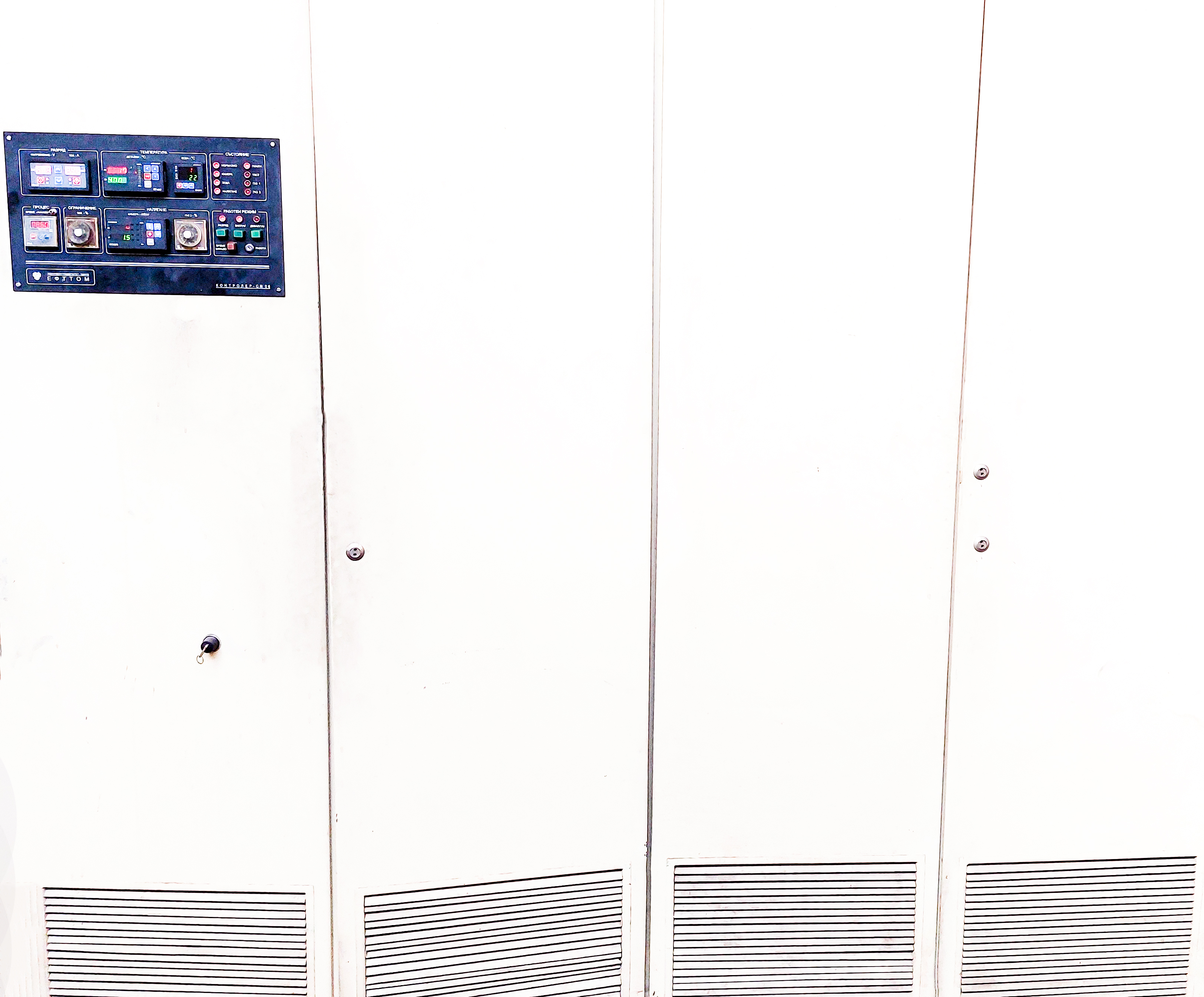
production, installation and commissioning of nitrogenation (carbonitriding) installations in a glow discharge (constant current or pulse) with powers of 20, 50, 100 and 200 kVА;
implementation of technologies for ion nitriding and carbonitriding of parts and tools;
warranty and non-warranty servicing of the devices;
repair and modernization of existing facilities; services for ion nitriding and carbonitriding.